
How Do We Really Know Things?
Understanding Anti Science and Evidence in an Age of Misinformation
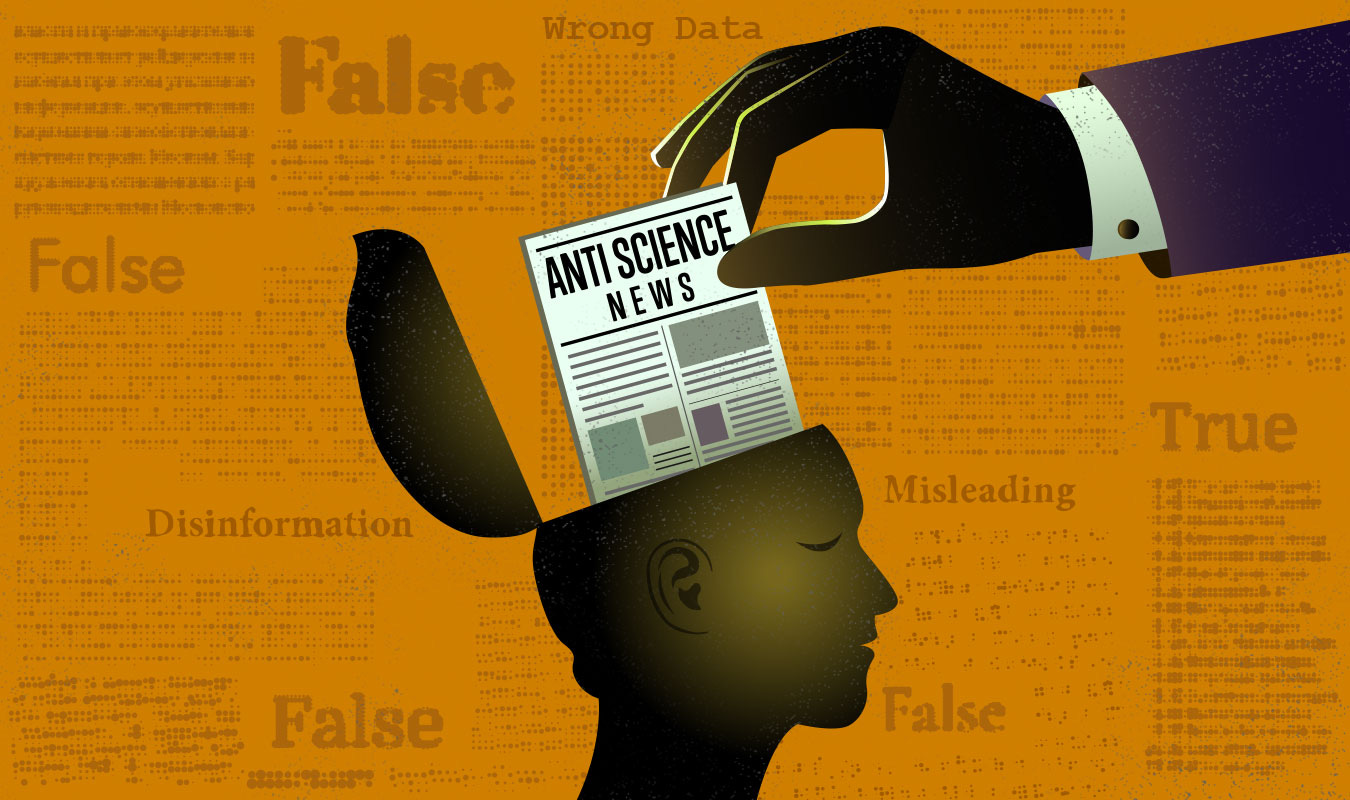
When I first started reading academic books and research papers, I often found myself asking a simple but profound question: How do we know this is true? How do we know that what we call “intelligence” or “knowledge” is actually correct? For a long time, information and knowledge felt like a blur to me. Over the last 20 years, as I’ve studied education, psychology, and the way we construct knowledge in our minds, I’ve learned that this question is not only valid—it’s essential.
Our beliefs, attitudes, and behaviours are shaped by the information we consume. But in today’s world, where opinions spread faster than facts, how do we separate truth from noise? How do we challenge misinformation with confidence? The answer lies in understanding evidence—and the hierarchy that determines its strength.
Why Evidence Matters More Than Opinions
We live in an era of endless voices: social media influencers, bloggers, commentators, and even well-meaning friends. Everyone has an opinion, but opinions are not evidence. When we make decisions—about health, education, politics, or even everyday choices—we need more than someone’s personal view. We need a system that helps us check the quality of information.
That system exists. It’s called the hierarchy of evidence, and it’s widely used in science and research. Understanding it can empower you to think critically, ask better questions, and avoid being misled.
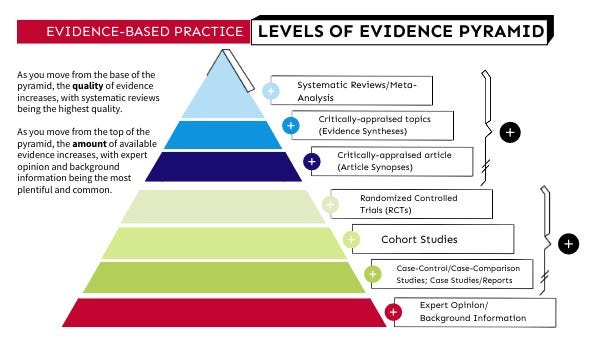
The Evidence Pyramid: From Weakest to Strongest
Imagine a pyramid. At the bottom, you have the weakest forms of evidence; at the top, the strongest. This structure helps us rank information based on how reliable it is.
At the base of the pyramid are opinion pieces, descriptive reports, and letters. These are often based on personal experience or observation. While they can be interesting, they lack rigorous testing. They tell us what someone thinks, not what has been systematically proven.
Next come cross-sectional studies, which look at groups of people at a single point in time. They can show patterns—like whether one group behaves differently from another—but they don’t prove cause and effect.
Case-control studies follow, comparing people with a condition to those without to find possible causes. This is stronger than cross-sectional research but still observational.
Cohort studies sit higher up the pyramid. They follow large groups over time, helping us see how behaviours or exposures influence outcomes. These studies are powerful because they track changes, but they still can’t fully rule out other factors.
Near the top are randomized controlled trials (RCTs), often called the gold standard for testing interventions. Participants are randomly assigned to groups—one gets the treatment, the other doesn’t (or gets a placebo). This design minimizes bias and helps us understand what really works.
Finally, at the very top are systematic reviews and meta-analyses. These don’t just look at one study—they synthesize results from many studies to give a comprehensive picture. This is the strongest evidence we have because it considers the full body of research.
Why This Matters in the Age of Misinformation?
Every day, we’re bombarded with claims: “This diet works,” “This product cures disease,” “This is the truth about politics.” But before accepting any claim, ask: What type of evidence supports this? Is it just an opinion? A single study? Or a systematic review?
This mindset is crucial because misinformation thrives on weak evidence—or no evidence at all. When we fail to question sources, we risk making decisions based on hearsay rather than fact.
How to Think Critically About Information
Here’s a simple approach: When someone makes a claim, don’t just accept it. Ask what research supports it and what level of evidence it represents. Understand the hierarchy—opinions are at the bottom, systematic reviews are at the top. The stronger the evidence, the more confidence you can have. And if you encounter misinformation, don’t argue with emotion. Use evidence. Explain why stronger research matters.
Final Thoughts: Building an Evidence-Based Mindset
When I first learned about systematic reviews during my postgraduate studies, it was a turning point. I realized that knowledge isn’t just about collecting facts—it’s about understanding how those facts were tested and verified. Today, I believe this is one of the most important lessons for communities everywhere.
In a world full of opinions, we need to anchor ourselves in evidence. Before forming beliefs or sharing information, ask the hard questions: What type of evidence is this? How strong is it? This simple habit can protect us from misinformation and help us make better decisions.
So next time you read a headline, scroll through social media, or hear a bold claim, pause and think: Where’s the evidence?