
Why understanding history—especially colonisation—is essential to understanding health today
Health Inequalities Didn’t Start Yesterday

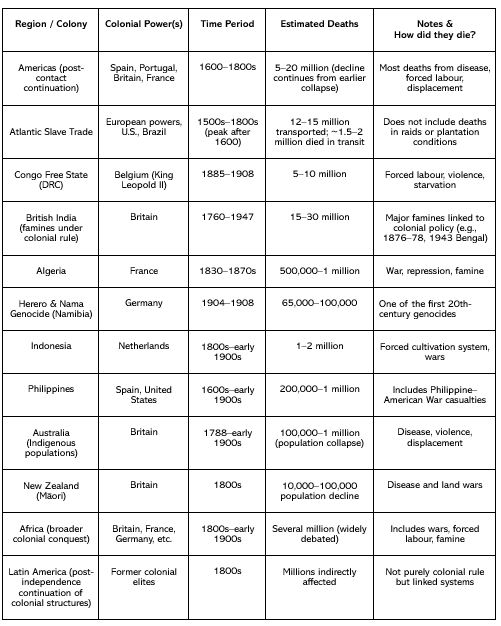
We often talk about health inequalities as if they are modern problems that have emerged in the here and now. We point to differences in life expectancy, rising rates of chronic illness, or disparities in mental health, and we try to explain them through present-day factors such as lifestyle, access to healthcare, or individual choices. While these explanations are not wrong, they are incomplete. They only tell part of the story, and focusing on them alone risks missing the deeper forces that have shaped these outcomes over time.
As a health psychologist, one of the most important lessons I have learned is that health cannot be fully understood without reference to history. In many parts of the world, this means engaging seriously with the legacy of colonisation. Colonisation was not simply about political control or territorial expansion; it fundamentally reorganised societies. It reshaped economies, altered food systems, displaced populations, and disrupted long-established cultural and social practices. These changes created inequalities that became embedded within systems and institutions, and they did not simply disappear when colonial rule formally ended.
Those historical transformations continue to shape the conditions in which people live today. They influence access to resources, exposure to risk, and opportunities for health and wellbeing. This is crucial because human behaviour—the central concern of health psychology—is not random or isolated. Behaviour is patterned, shaped by context, and developed over time. If we ignore the historical context, we risk misunderstanding why people behave in the ways they do. Consider, for instance, something as seemingly straightforward as diet. What people eat today in many regions is closely linked to historical processes, including the restructuring of agriculture under colonial systems and the later expansion of globalised food markets. Similarly, patterns of trust or mistrust in healthcare systems are often rooted in historical experiences of exclusion, neglect, or unequal treatment. Even mental health cannot be separated from these contexts, as experiences of displacement, marginalisation, and collective trauma can influence wellbeing across generations.
This highlights a broader point: studying behaviour requires more than observing what is happening in the present moment. It requires tracing patterns across time and understanding how these patterns emerge. When we take this approach, we begin to see that what often appears to be an individual choice is shaped by structural conditions, and what looks like a current problem is often the result of long-term processes. In this sense, many of the “risk factors” we identify in health research are not just immediate causes, but the outcomes of historical trajectories.
The implications of this are significant for how we respond to health inequalities. If we treat them purely as contemporary issues, we tend to focus on short-term, surface-level solutions, such as encouraging behaviour change or improving access to services. While these are important, they do not address the underlying structures that consistently reproduce unequal outcomes. Without a deeper understanding of how these inequalities were formed, our interventions risk being limited in both scope and impact. To move forward more meaningfully, we need to adopt a broader perspective that places history at the centre of our analysis. This means asking where current patterns come from, how past systems continue to shape present realities, and how behaviour is influenced by the environments people inhabit. It also requires a willingness to engage with uncomfortable aspects of history, including the enduring consequences of colonisation.
Ultimately, if we are serious about addressing health inequalities, we cannot afford to treat them as ahistorical problems. Health psychology has an important role to play in bridging individual behaviour and wider structural forces, but it can only do so effectively by taking context seriously—and that context is always, in part, historical. Without this perspective, we risk treating symptoms rather than causes, and limiting our ability to create lasting change.
Further Reading
Farmer, P. (2004). Pathologies of Power: Health, Human Rights, and the New War on the Poor
Rodney, W. (1972). How Europe Underdeveloped Africa
Kleinman, A. (1980). Patients and Healers in the Context of Culture
Krieger, N. (2011). Epidemiology and the People’s Health: Theory and Context